How PDF to ESX Conversion Supports Estimate Negotiation
Use Cases
Jan 27, 2026
Zach Gardner, CEO @ClaimsFlow
Estimators know how long negotiations can take.
You submit an estimate. The adjuster writes a comparative. Then the emails start:
“You missed this scope.”
“We can’t pay for this line item.”
“You missed the following items.”
Days pass between replies. Both sides juggle other claims. Each turn requires reopening the original estimate and reorienting: Is she talking about my bedroom or hers?
Weeks later, you both finally agree. The adjuster manually rewrites the changes back into her estimate. Then the work can begin.
The negotiation process above has a number of inefficiencies. Negotiation happens outside the estimate, creating information loss, duplicate work, and adversarial conversations that drag out cycle times and increase costs.
This process is another example of why the claims cycle has a flow problem. Inefficiencies here — like elsewhere across the cycle — slow cycles, increase administrative overhead, and can turn negotiations into an adversarial dogfight.
In this post, we’ll break down the specific issues and show you how estimators are using ClaimsFlow’s PDF-to-ESX tool to accelerate cycle times and smooth negotiations.
2: Why Claims Negotiations Are Inefficient
Negotiation happens out of context
Today, negotiation happens outside the estimate, which means collaboration is detached from the actual work product.
This leaves very little context for proposed changes. Line-item detail disappears. There is no common scope, no quantities, and no calculations. Without a clear reference point, both sides are forced to translate comments back into their original versions of the estimate:
“Are you talking about my entryway or your mudroom?”
“What is this line item replacing in my file?”
Without a shared ground truth, adjusters and contractors must constantly reorient themselves, reopening estimates to understand what the other person is asking for. This creates confusion, delays, and unnecessary coordination work.
Email negotiation also pushes conversations towards abstraction, rather than concrete line-item adjustments. This is a less effective way to reach alignment.
Manual rework creates friction and delay
Current negotiation processes also create significant duplicate work. Both the contractor and the carrier write separate estimates. After both sides reach an agreement, the adjuster must manually write-in the agreed-upon changes into her estimate.
The adjuster becomes the integration layer, manually adding comments from emails into the final file. This introduces additional friction and delay.
Defending estimates instead of aligning on scope
The process also pushes both adjusters and contractors to develop ownership over their version of the estimate. The estimate becomes their artifact – their reality.
As a result, negotiations shift from collaborative problem-solving to defending outcomes. Instead of aligning on inputs – such as scope and line items – both sides dig in around totals and conclusions.
This can make the negotiation process feel adversarial and exhausting, creating additional back-and-forth that slows the cycle.
3. Move Negotiation into the estimate with PDF to ESX
ClaimsFlow’s PDF to ESX allows contractors to change where negotiation happens.
Instead of working from separate estimates and negotiating over email, contractors convert an adjuster’s PDF into a full Xactimate ESX file and propose edits directly inside the estimate.
Note: Contractor bolds line items to indicate changes
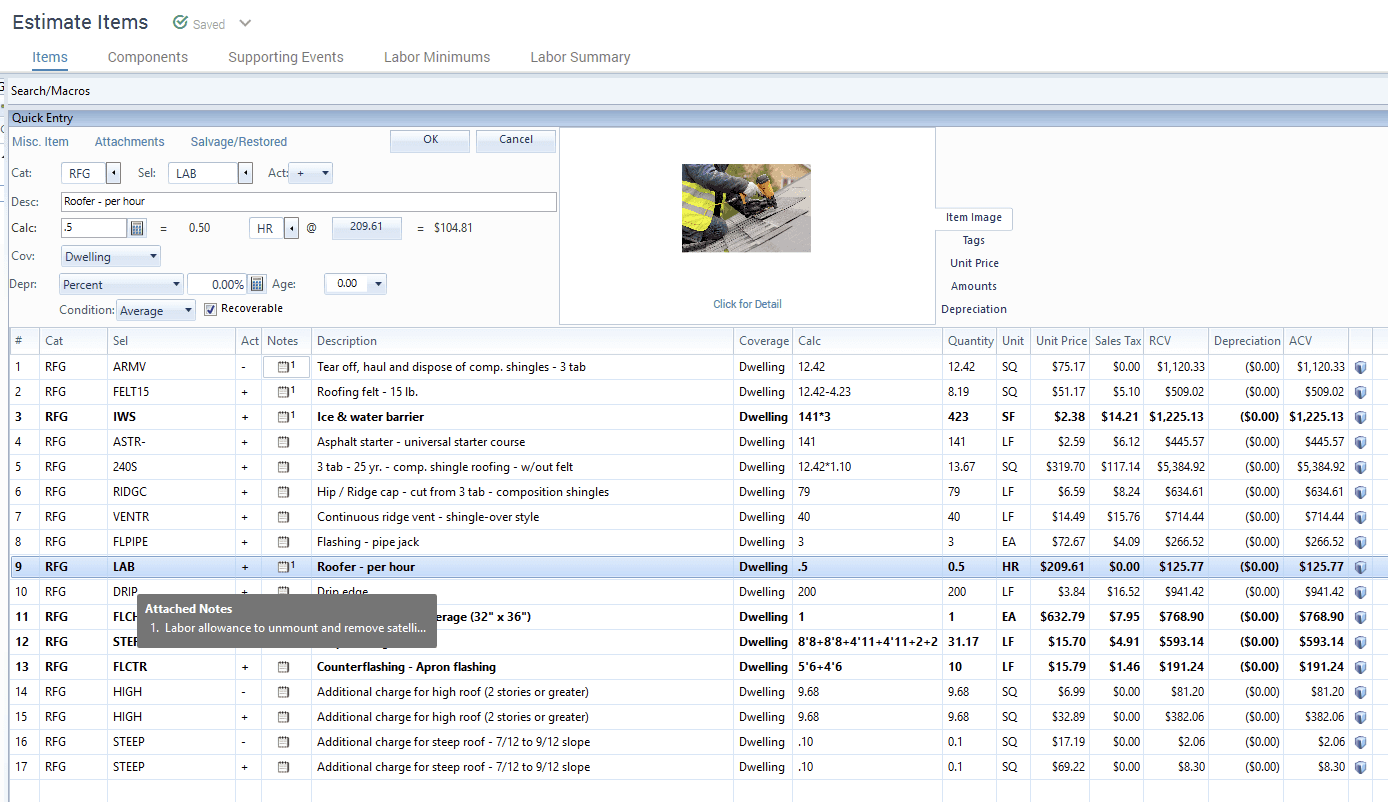
Both sides now work from a single source of truth. Line items, quantities, and scope live in one place, and every change is immediately visible.
Moreover, agreement now happens inside the estimate, which means that there's no email thread to translate back into estimating software. The proposed changes are reflected in the file.
Negotiation shifts from abstract debate to concrete edits, room by room and line by line. Context switching drops. People stop acting as the integration layer.
The result is a clearer, faster, more collaborative claims process.
4. Change where negotiation happens
A big problem with the negotiation process today is where the process lives – in email threads.
When collaboration happens inside the estimate, alignment happens line by line, friction drops, and claims resolve faster.
Try ClaimsFlow and see what happens when negotiation moves where the work actually lives.
Related Articles:

