How J&J Remodeling Saved 20 hours per Week Converting PDFs to Xactimate
Case Studies
Nov 10, 2025
Zach Gardner, CEO @ClaimsFlow
Highlights
Saved time for estimating: William now converts PDF scopes to Xactimate in minutes, saving 12–20 hours per week.
Cleared backlog in days: Processed 177 files in 10 days, eliminating a 3–4 month backlog almost overnight.
Freed up Production Managers: Automated conversions allowed Production Managers to create work orders through DASH, replacing hours of manual work order creation.
Kept projects on budget: Accurate, insurance-approved scopes now flow seamlessly through DASH, keeping every job on scope and on budget.

Overview
J&J Remodeling, a Georgia-based general contractor, was buried under a surge of insurance claims after Hurricane Helene. Estimates piled up faster than the team could process them, and converting adjuster PDFs into Xactimate (ESX) files became the choke point.
“It would have taken me 3 - 4 months to convert all those projects,” says William Ledbetter, J&J Remodeling’s Head of Estimating.
Processing regular incoming estimates already took up a significant chunk of William’s time. The growing backlog forced Production Managers into extra manual work and created inefficiencies that pushed some projects over budget.
PDF conversions: The critical link in J&J’s estimating workflow
J&J’s estimating workflow runs from initial estimates & supplements to final work orders and budgets. Converting estimates from PDF to Xactimate (ESX) is the link that ties each stage of the workflow together. It’s also one of the slowest, most manual steps.
William converts PDF estimates to ESX for two purposes:
1. Supplement adjuster’s estimates. William converts the adjuster’s PDF to Xactimate to compare scopes, identify missing items, and add supplements directly to the adjuster’s file, bolded in-line for easy review.
2. Create budgets and work orders. William converts estimates to Xactimate to generate insurance-approved budgets and work orders in DASH, J&J’s job management platform. These work orders outline each subcontractor’s scope and budget.
PDF conversions keep J&J’s workflow connected, but the manual processes slow it down.
The bottleneck that slowed everything down
Before ClaimsFlow, William spent two to five hours retyping each adjuster’s PDF estimate into Xactimate.
Rewriting an estimate takes a ton of time,” says William, “you have to type up every single line item one by one – sometimes hundreds of them – and then add quantities and adjust prices.
At that pace, he could only rewrite one estimate a day, leaving dozens of project scopes unprocessed and unconverted.
This bottleneck rippled through the business. To create work orders, Production Managers combed through insurance-approved PDF scopes, manually mapped every line item to a specific trade – e.g. Seal (1 coat) & paint (2 coats) baseboard -> PNT – and built work orders and budgets by hand.
Image: Production Managers mapped each line item to a trade to create work orders.
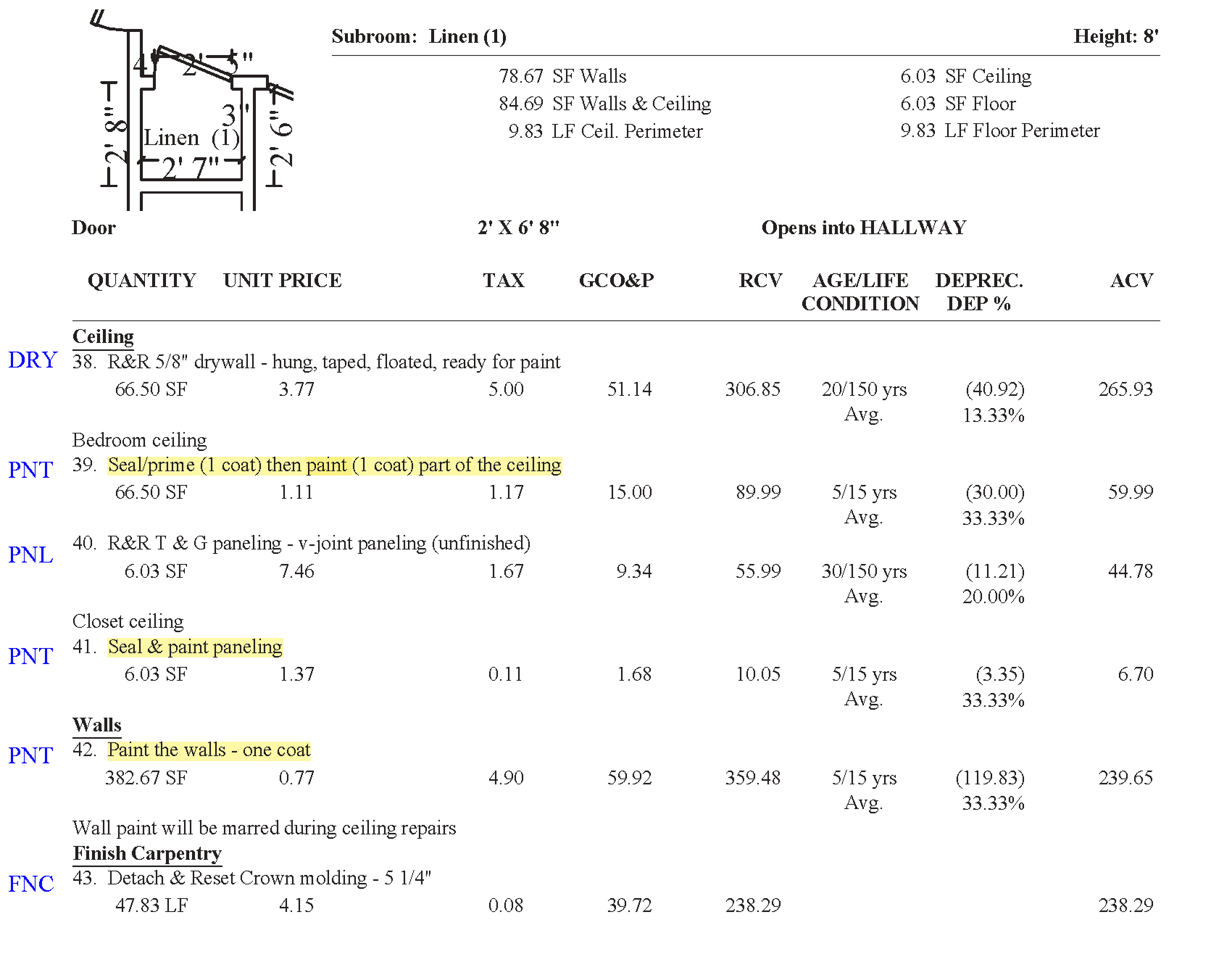
It was tedious, error-prone work that often led to unclear budgets and cost overruns.
Real-time PDF conversion. Zero bottlenecks.
With ClaimsFlow, William now converts PDF scopes to Xactimate in minutes, saving him 12 to 20 hours every week.
One night I was on the phone with the owner, and I told him, ‘I’m going to see how many I can put in at once before it tells me I need to slow down.’ And it never did. I had 8 or 9 scopes processing at a time, and it’d take five minutes to get back the ESX. “I couldn’t believe it. I couldn’t be more impressed with the platform.
Within 10 days, William processed 177 files through ClaimsFlow – clearing a 3- 4 month backlog in days and freeing Production Managers from hours of additional manual work. Furthermore, with clear, automated work orders created by DASH, projects now stay on scope and on budget.
“At the end of the day,” says William, “ClaimsFlow is really saving the project manager’s ass from doing things out of budget.”
Looking ahead
With ClaimsFlow in place, William can now supplement adjuster estimates in minutes instead of hours, freeing time to focus on higher-value work. For J&J, removing the PDF bottleneck means the entire operation runs smoothly: production managers no longer have to build work orders by hand, projects stay on budget, and the team can take on more jobs without adding overhead.
Related Articles:

©
2026
ClaimsFlow. All rights reserved.